From Arrival Night to Closing Circle: A Ten-Day Art Course in the Mountains
What we ran each day on a small art-based course, the shifts we noticed in the group, and the changes we would make next time.
We arrived at the guesthouse near the mountain village on a Sunday evening in late September. Eleven participants, two facilitators, and a dining room we would turn into a studio by morning. The first night was mostly practical: who sleeps where, what we eat, how the week would run. But something else happened too. People spread their sketchbooks on the long table without being asked, and by the time the soup arrived, strangers were leaning over each other's drawings. That small, unplanned moment set the tone for the ten days. We kept the structure light and the materials visible, and the group did the rest. This is the course we planned around making, not talking about it.
We ran the course from Sunday evening to the following Wednesday morning. Eleven participants came from five countries, most of them with some art experience but not much formal training. The guesthouse had a wide dining room with north light, and we cleared two long tables for paper, paint, clay, and a box of tools we borrowed from the owner's shed. Mornings were for technique. Afternoons were open studio. Evenings were for reflection and, on two occasions, for walking.
What each day looked like
We did not plan a rigid timetable. We planned a rhythm and adjusted it. The table below shows how the ten days actually ran, including the changes we made on the spot.
| Day | Focus | What we actually did |
|---|---|---|
| 1 | Arrival and settling | Shared meal, room assignments, first sketchbook prompt on the terrace |
| 2 | Line and mark-making | Charcoal warm-up, blind contour drawings in pairs, group wall of marks |
| 3 | Colour mixing | Limited palette exercise, then a shared colour chart the group kept adding to all week |
| 4 | Collage and found material | Walk to collect leaves, paper scraps, and fabric; individual collage studies |
| 5 | Open studio | No taught session; facilitators available for one-to-one help |
| 6 | Printmaking | Simple relief prints on cardboard, drying lines across the dining room windows |
| 7 | Free afternoon | Half the group hiked; the other half stayed and drew in the garden |
| 8 | Collaborative piece | One large paper on the floor, everyone working at once, no assigned sections |
| 9 | Finishing and peer feedback | Structured pairs, then a full-group viewing of work |
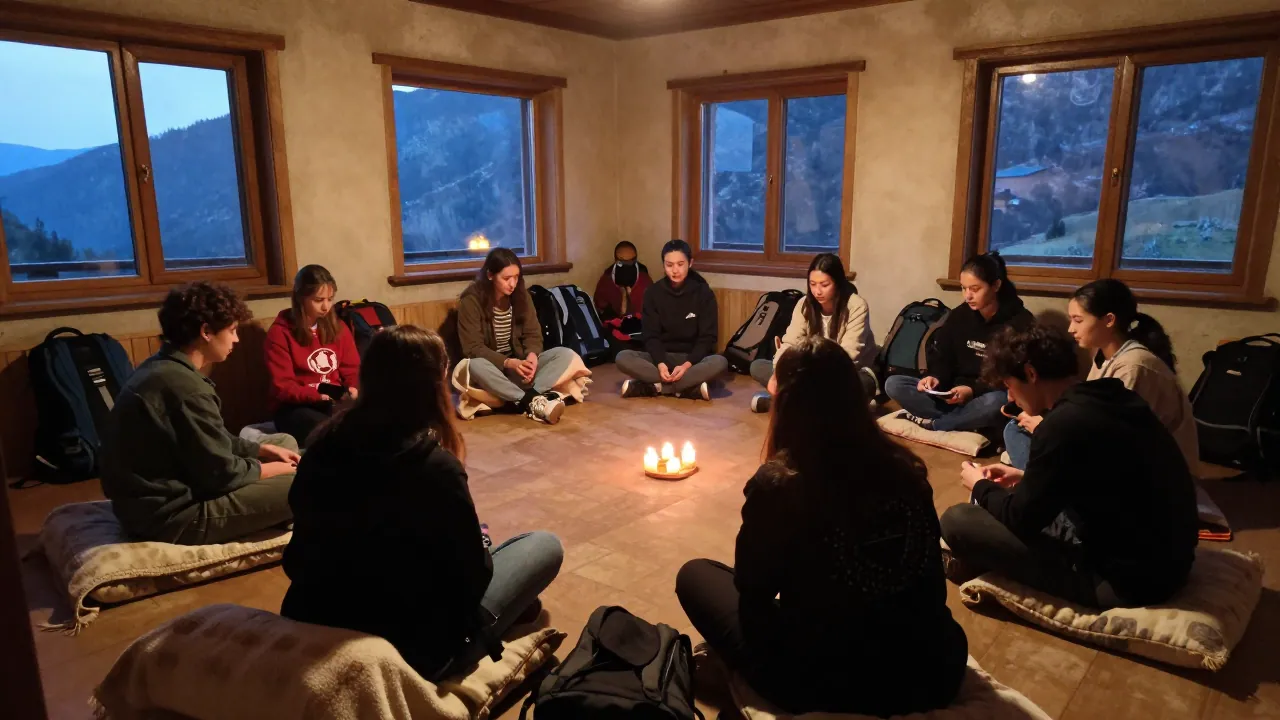
| 10 | Closing circle | One object and one sentence each, then packing and departures |
Two of these days mattered more than we expected. The open studio on day five was quiet at first; several people said they did not know what to do without a task. By lunchtime, though, the room had filled with small experiments. And the collaborative piece on day eight unsettled people in a useful way. Working on the same sheet meant negotiating space, and a few participants found that harder than any technique exercise. We talked about it that evening, and those conversations shaped the closing circle.
What shifted in the group
The clearest change was in how materials moved around the room. On day two, people kept to their own paper and their own corner. By day six, brushes and jars were shared without asking, and someone had started a communal scrap box that everyone used. That sounds small. It changed the atmosphere. People began commenting on each other's work without being invited, in a way that felt generous rather than critical.
The other shift was in who spoke during reflections. In the first days, four or five voices carried the evening discussions. After the peer feedback session on day nine, more people offered opinions, including several who had been quiet all week. We did not do anything clever to make that happen. The structured pairs gave people a low-pressure way to practice talking about work, and by the final evening they were ready to do it in the larger group.
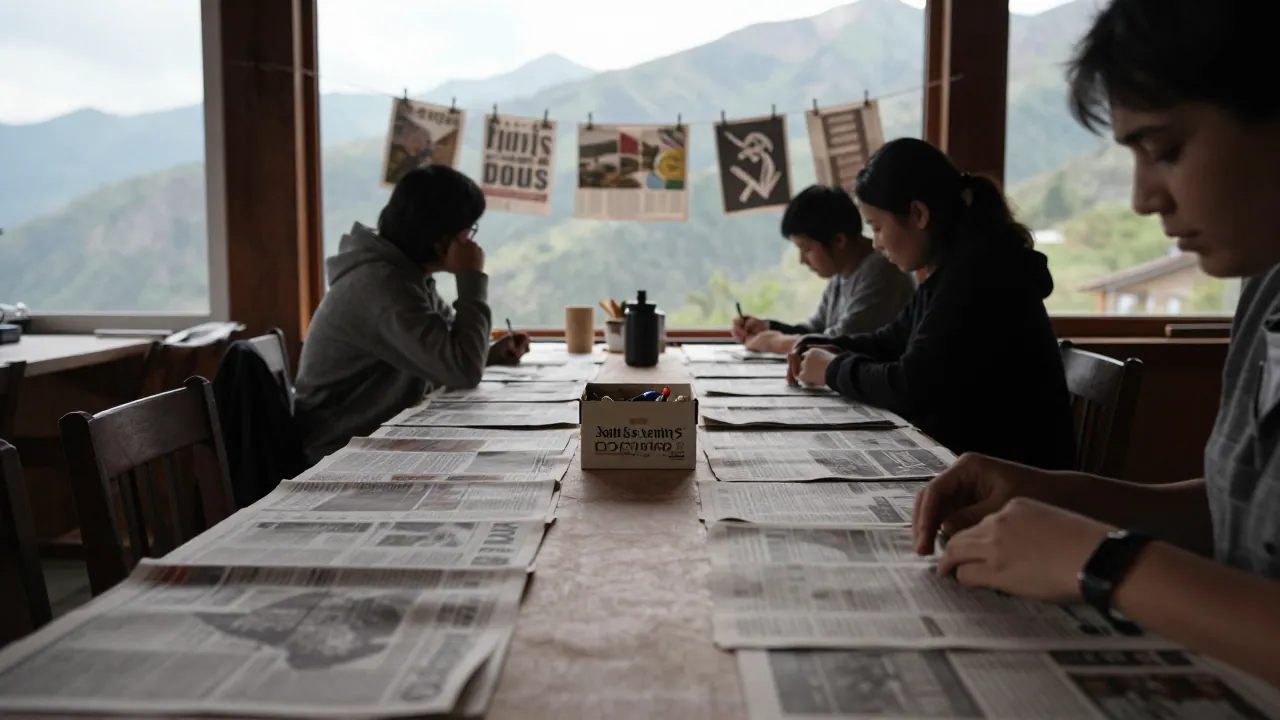
The work got better once people stopped asking permission. That took longer than I expected, and it needed empty time more than another exercise.
What we would change
We would cut the first technique day in half. Day two was too long, and it set a schoolroom tone that took a few days to shake off. The blind contour exercise was useful; the second block of drawing drills was not. We would replace it with a short making session and an early walk.
We would also protect one unstructured afternoon from the start. The free afternoon happened because we were behind schedule, not because we planned it, and it turned out to be one of the best parts of the course. Building it into the venue plan and the budget from the beginning would make it easier to keep. Third, we would send a short materials list in advance. A few people brought nothing and spent the first day borrowing, which added a small but avoidable friction. Fourth, we would schedule the peer feedback earlier, around day seven, so the group has more time to use what it learns.
We also want to be more deliberate about inclusion from the first evening. The inclusion habits we now build into every agenda were partly there, but we improvised. Next time, the closing circle will include an explicit invitation to pass, and the reflection prompts will be shared in writing as well as spoken, so people who need time to think can prepare.
What happens next
We are collecting a short written reflection from each participant and will publish a few of them, with permission, in the coming weeks. The collaborative piece stays with the guesthouse; the owner asked to hang it in the dining room, and the group agreed. A second run of the course is planned for late spring, at a different venue with a similar layout. Before then, we will rewrite the day-by-day plan using the table above as the starting point, and we will share the revised materials list with everyone who applies.
Questions people ask
How many people took part in the course?
Eleven participants and two facilitators, with one guest facilitator joining for two days. The group came from five countries, and most participants had some art experience but no formal training.
Do I need to be good at drawing to join?
No. The course is built around trying things rather than finished results. On the first day we say this plainly, and the open studio time exists so people can work at their own level without pressure.
Will there be another art course?
We are planning a second run for late spring at a different venue. Details will go out on the blog and in our newsletter once the venue and dates are confirmed.