Running an Art-Based Session When Half the Group Won't Draw
Practical warm-ups and framing that get reluctant participants into creative work without putting anyone on the spot.
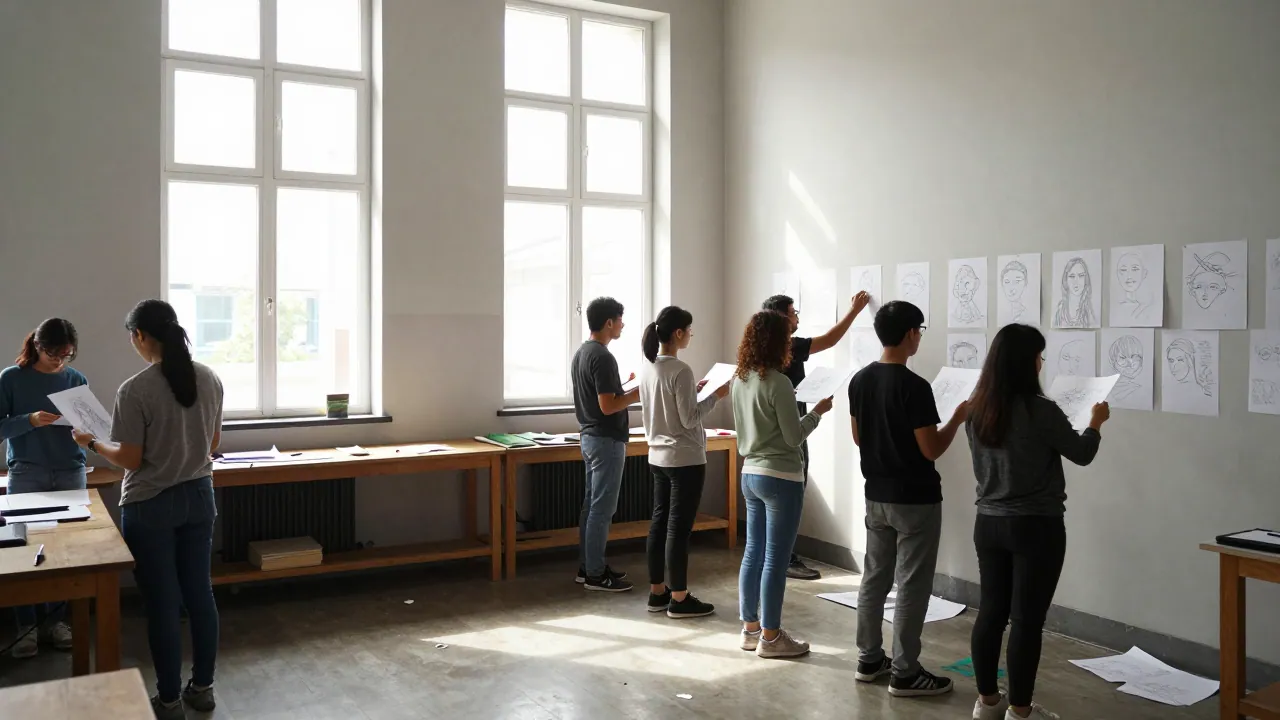
We have all seen it: you spread paper and brushes across the tables, say a few encouraging words, and half the room finds a sudden interest in the coffee corner. In ten years of running art-based youth exchanges, we have learned that reluctance is rarely about laziness. It is usually about fear of being judged, bad memories of art class, or simply not knowing where to start. This guide is for facilitators, volunteers, and hosts who want everyone in the room making something, not just the people who already feel at home with a pencil. You will find warm-ups that lower the stakes, language that reframes what art is for, and small habits that keep the quiet ones involved. The ideas come from our own training courses and exchanges and from the honest feedback participants give us at the end.
Who this guide is for and what you will be able to do
This is for anyone who has to stand in front of a group with materials on the table: youth workers on exchange, volunteers running an evening activity, trainers on a short course. You do not need an art background. You need a plan that makes the first ten minutes easy enough that people forget to be nervous. By the end, you will be able to run a ninety-minute session where everyone contributes something and no one is asked to perform talent.
Before we get into steps, it helps to know what you need. Most of our sessions run on a small budget, and you can adapt the list to what the venue has. If you are still choosing a space, our notes on picking a venue for a small training course may save you a headache later.
- Plenty of paper in different sizes, including scraps and old newspaper.
- Simple tools: soft pencils, markers, a few brushes, and cheap watercolor or poster paint.
- Masking tape, scissors, and a wall or floor space where work can be left out.
- A timer that everyone can see or hear.
- Optional comfort items: scrap magazines for collage, glue sticks, fabric scraps.
Notice what is missing: no erasers. Erasing signals that a mark was wrong, and we want the opposite message in the first hour.
Step by step: a ninety-minute session that brings people in
The sequence below is what we use on the first morning of an art-based course. It works with mixed groups and with people who have never made anything since school.
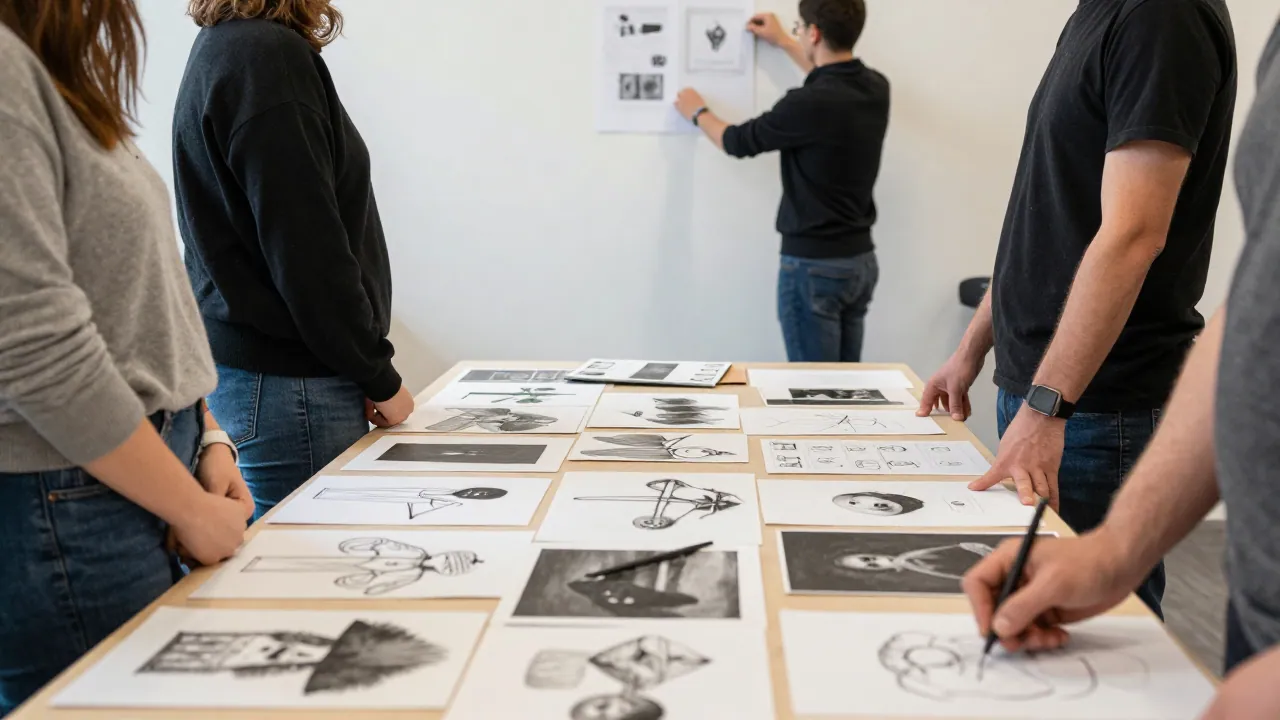
- Warm-up one, five minutes: everyone gets a sheet and a marker. Ask them to fill the page with one continuous line while talking to a partner. No looking at the paper. The goal is to make a mark without deciding whether it is good.
- Warm-up two, ten minutes: pairs swap papers and add three marks to the other person's line. Then swap back. This quietly breaks the idea that the page belongs to one person, and it gives everyone permission to touch someone else's work.
- Demo, five minutes: you make a messy drawing in front of the group and narrate your choices out loud. Say what you are doing and why, including the parts that do not work. This is the single most useful thing you can do to lower the room's temperature.
- Main activity, thirty-five minutes: a simple prompt with a constraint. For example, draw a place where you felt welcome, using only three colors. Constraints reduce the blank-page problem because there is less to decide.
- Pairs and sharing, twenty minutes: people show their work to one partner, not the whole group. Each person asks one question about the other's drawing. No comments on skill.
- Closing, ten minutes: everyone writes one word on a sticky note and adds it to a shared wall. Read a few aloud, thank the group, and leave the work up.
If you are planning a longer programme, these habits fit well into the agenda we describe in three inclusion habits we now build into every session. They are small enough to repeat daily.
Framing that changes the room without singling anyone out
Language does a lot of the work. We avoid words like talent, good, and beautiful. Instead we say: this is a way to think with your hands, or this is a sketch, not a finished piece. When someone says they cannot draw, we answer plainly: you do not need to. We are not making an exhibition. We are making a record of an idea.
We also give everyone a role that is not about drawing. In every small group, one person is the timekeeper, one is the materials keeper, one is the note-taker. Those roles rotate each session. A participant who is nervous about the pencil can still be essential to the group, and the group learns that art work includes choosing paper and keeping time.
I used to sit at the back and wait for the drawing part to end. Then I was the timekeeper for a day and realized I was still part of it.
One more habit: never ask for volunteers to show work. Ask pairs to decide together if they want to put something on the wall. The choice belongs to two people, not to one shy person in front of thirty.
Common mistakes and how to avoid them
We have made most of these mistakes ourselves. The good news is that they are easy to correct in the next session.
| Mistake | What it does | Try instead |
|---|---|---|
| Big blank paper as the first task | Raises the stakes before any warm-up | Start with a small scrap and a single line |
| Asking for volunteers to present | Singles out the confident few | Share in pairs, then invite pairs to post work |
| Praising one drawing as 'good' | Quietly ranks everyone else | Name what you notice: colors, a shape, a choice |
| Explaining for fifteen minutes | Lets nerves build while people sit still | Demonstrate by making something messy yourself, briefly |
What to do after the session
Leave the work on the wall for the rest of the day. People look at it differently when they are not being watched. At the end of the week, we photograph the wall and ask each participant to choose one piece to keep. The rest goes into a group journal, which you can read more about in our guide to keeping a group journal.
Finally, ask for feedback in writing and anonymously. The useful answers are rarely about the art. They are about feeling included, having enough time, and knowing what was expected. That is the information that makes the next session better, and it is the reason we keep running these rooms.
Questions people ask
What if someone refuses to touch the materials at all?
Do not push. Offer the timekeeper or note-taker role and let them stay at the edge of the table. In our experience most people join a warm-up within a day or two once they see that no one is being judged.
How many materials do we need for twenty people?
Less than you think. Twenty sheets of paper, ten markers, a few pencils, and one roll of tape will run a ninety-minute session. Pairs can share tools, which also starts conversations.
Can this work in a room with no art supplies?
Yes. Newspaper, receipts, and a borrowed marker are enough for the warm-ups. The main activity can be collage from scrap or a drawing on the back of a printed agenda.