When Facilitation Went Quiet: Lessons From a Difficult Session
A planned group discussion stalled on day four in Kobuleti. Here is what we tried in the room and the simpler format that worked the next morning.
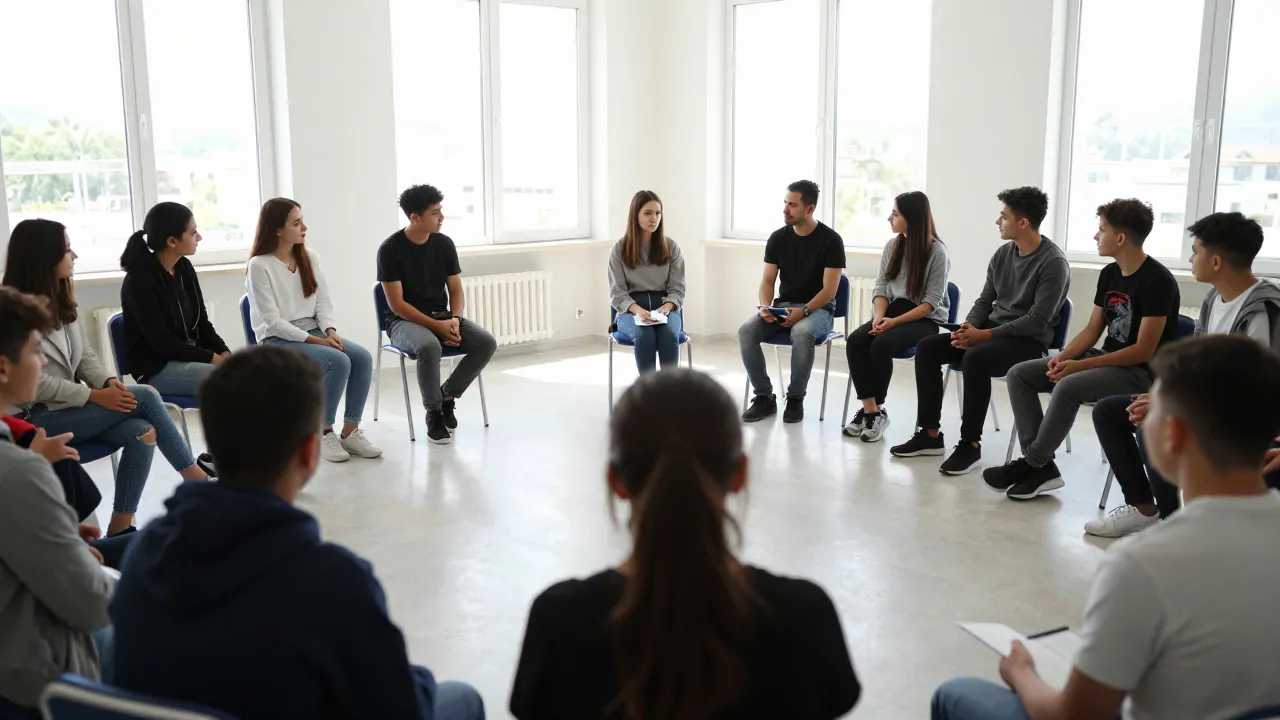
In June 2016 we ran a seven-day youth exchange in Kobuleti, Georgia, on sharing economy and collaborative consumption. The group was mixed by country and age, and most sessions were built around interaction. On day four, a ninety-minute discussion on consumer habits simply stopped. People had plenty to say in pairs but went silent in the circle. We tried three fixes in the room, none of them fully worked. The next morning we changed the format rather than the topic, and the conversation finally moved. This is an honest account of that stall and the small adjustments we kept. We wrote it up because we have seen the same pattern since, and because the fix was less dramatic than we expected. You can read the full exchange report for context on the week.
What we planned for day four
The session was called "What we buy and what we keep". We had run it before in a smaller room with a group of twelve, and it had gone well. The plan was simple: a ten-minute framing talk on collaborative consumption, a twenty-minute pair interview about a recent purchase, then a forty-minute plenary where each pair reported back and the group looked for patterns. We had a flipchart with three questions and a facilitator with a stopwatch.
The pair work went fine. People talked about phones, shoes, kitchen tools, a car one participant had shared with two neighbours. The energy was good. When we moved to the circle, it dropped. The first two reports were long. The third was a list of facts. After that, people looked at the floor. We had forty minutes left and nothing to fill them with.

Three things we tried in the room
We did not want to abandon the session. We tried three moves in sequence, each one a little more structured than the last.
- We split the circle into groups of four and gave each group one question from the flipchart. This helped for about ten minutes. The groups talked, but the reports back were thin.
- We handed out a prompt sheet with sentence starters, such as "The last thing I threw away was…" and "I borrow this from…". Some people used it. Others found it artificial and said so.
- We asked people to write one sentence on a card and put it on the wall. This produced good material, but by then we had run out of time to discuss it.
None of these was a failure exactly. Each produced something. But the room never became a conversation. People were performing for the facilitator rather than talking to each other. We closed on time and said we would pick it up the next day.
The simpler format that worked the next day
The next morning we kept the topic and changed everything else. We started with five minutes of writing. Each person wrote two short notes: one thing they had bought and regretted, one thing they had shared or borrowed in the past month. No names on the notes. We collected them and read a few aloud without comment.
Then we ran two rounds of small groups of three, each with a single question and eight minutes on a visible timer. Round one: what makes something easy to share? Round two: what makes it hard? After each round, one person from each group wrote a single phrase on the board. No reporting back in the circle. The board did the work.
The final twenty minutes were a whole-group conversation led by the board, not by us. We asked people to group the phrases and name the clusters. They found four: trust, cost, storage and habit. That was more than we had planned for. The room was quiet in the good way, and people were talking to each other rather than to the front.
We have used some version of this format since. It is not original, and it is not complicated. The change was to stop asking people to report and start asking them to place their thinking somewhere visible. For more on structuring sessions so that quieter participants stay in the room, see our notes on inclusion habits we now build in.
| Session element | Day four plan | Day five format | What changed |
|---|---|---|---|
| Opening | 10-minute talk | 5 minutes of silent writing | Input before words |
| Small groups | Pairs, 20 minutes | Trios, 8 minutes × 2 rounds | Shorter, twice |
| Reporting | Plenary, sequential | Board phrases, no report-back | Visible, anonymous |
| Whole group | 40 minutes | 20 minutes guided by the board | Less time, more focus |
| Facilitator role | Running the circle | Reading the room and grouping | Step back |
What this cost us and what we kept
We lost about half a session to the stall on day four. That is a real cost on a seven-day exchange. We also learned that our planning had assumed a group size and a room that we did not have. The original plan came from a session with twelve people in a small room; in Kobuleti we had more people and a wider circle. That is a planning error, not a participant problem.
What we kept: silent writing at the start of discussion sessions, trios instead of pairs for reporting, a visible board, and a timer that everyone can see. We also stopped scheduling long plenaries in the first half of a week. Early in a project, groups are still forming, and a forty-minute circle is a lot to ask. Short formats with a clear handover work better. Budget planning for this kind of session is covered in our guide to youth exchange budgets that hold up.
What we dropped: prompt sheets with sentence starters, which felt artificial to this group, and the assumption that a good pair conversation will carry into a plenary. It often does not.
What we will change next time
- Build the agenda in two halves: short formats early in the week, longer plenaries only after day four.
- Plan every discussion session with a visible artefact, such as a board, cards or a shared document.
- Give facilitators a fallback that changes the format, not just the group size, if the room goes quiet.
- Note the room layout in the plan. A circle of thirty is a different room from a circle of twelve.
- Ask a co-facilitator to watch the energy and call a format change early, rather than at minute forty.
We are a small group and we do not have a fixed method. What we have is a record of what happened in rooms like the one in Kobuleti. The quiet session was not a disaster. It was a useful, slightly uncomfortable lesson, and the next day was better because of it.
Questions people ask
Why did the discussion stall if the topic was interesting?
The topic was fine. The format asked people to repeat pair work in a large circle, which rewarded confident speakers and tired everyone else. Changing the format, not the topic, fixed it.
What is the simplest change we can make to a stalling session?
Ask people to write one short note and place it on a shared board, then group the notes together. It takes five minutes and gives the room something to talk about that is not the facilitator.
Do you use this format on every project now?
Mostly for discussion-heavy sessions. We still use longer plenaries later in a week, once the group knows each other. Early in a project we keep formats short and visible.